
From smartphones to tablets, desktops, and even wearables, technological progress has transformed the testing environment, as well as the features required from testing tools. BrowserStack and Sauce Labs are two popular tools for cloud-based device testing, and in this article, we’ll provide the pros and cons of each to help you decide which tool to incorporate into your tool stack. We’ll also introduce an exciting alternative for you to consider.
For developers, ensuring consistent software functionality across a vast array of devices, operating systems, and browsers — often termed "device diversity" — is a monumental task. But with cloud-based device testing, developers can access a virtual collection of real devices, all hosted in the cloud — and this has a number of benefits:
When you’re developing a new application or even just a new feature, one of the main challenges is to ensure that the app's user interface remains consistent across different screen sizes and resolutions. Moreover, functionalities like push notifications and real-time messaging must work seamlessly across various OS versions. This is where cloud-based testing platforms come in. With them, you can access a range of real devices, conduct simultaneous tests, and obtain immediate feedback, guaranteeing a uniform experience for all users.
However, each approach comes with its own set of unique challenges:
.table_component { overflow: auto; width: 100%; } .table_component table { border: 1px solid #dededf; height: 100%; width: 100%; table-layout: fixed; border-collapse: collapse; border-spacing: 1px; text-align: left; } .table_component caption { caption-side: top; text-align: left; } .table_component th { border: 1px solid #dededf; background-color: #eceff1; color: #000000; padding: 5px; } .table_component td { border: 1px solid #dededf; background-color: #ffffff; color: #000000; padding: 5px; }
| Testing Method | Challenges |
|---|
| On-Premises Testing
| Significant investments required for infrastructure setup. Regular upgrades needed for equipment, machines, and software. Both virtual and physical storage areas may be required, leading to higher costs |
| Cloud Testing
| Potential issues with network latency affecting response times. Concerns about data safety and security. Integration challenges with different cloud providers. Potential for increased expenses if not managed properly |
| In-House Device Labs |
Limited coverage due to a restricted range of devices, browsers, or OS versions. Geographical limitations preventing testing from various locations. Time-consuming and resource-intensive setup and maintenance. High costs associated with constant device updates and lab maintenance
|
Cloud-based device testing is a key component of software development. It's not merely about ensuring software functionality; it's about ensuring that every user, regardless of the device they’re on, receives a consistent, premium experience.
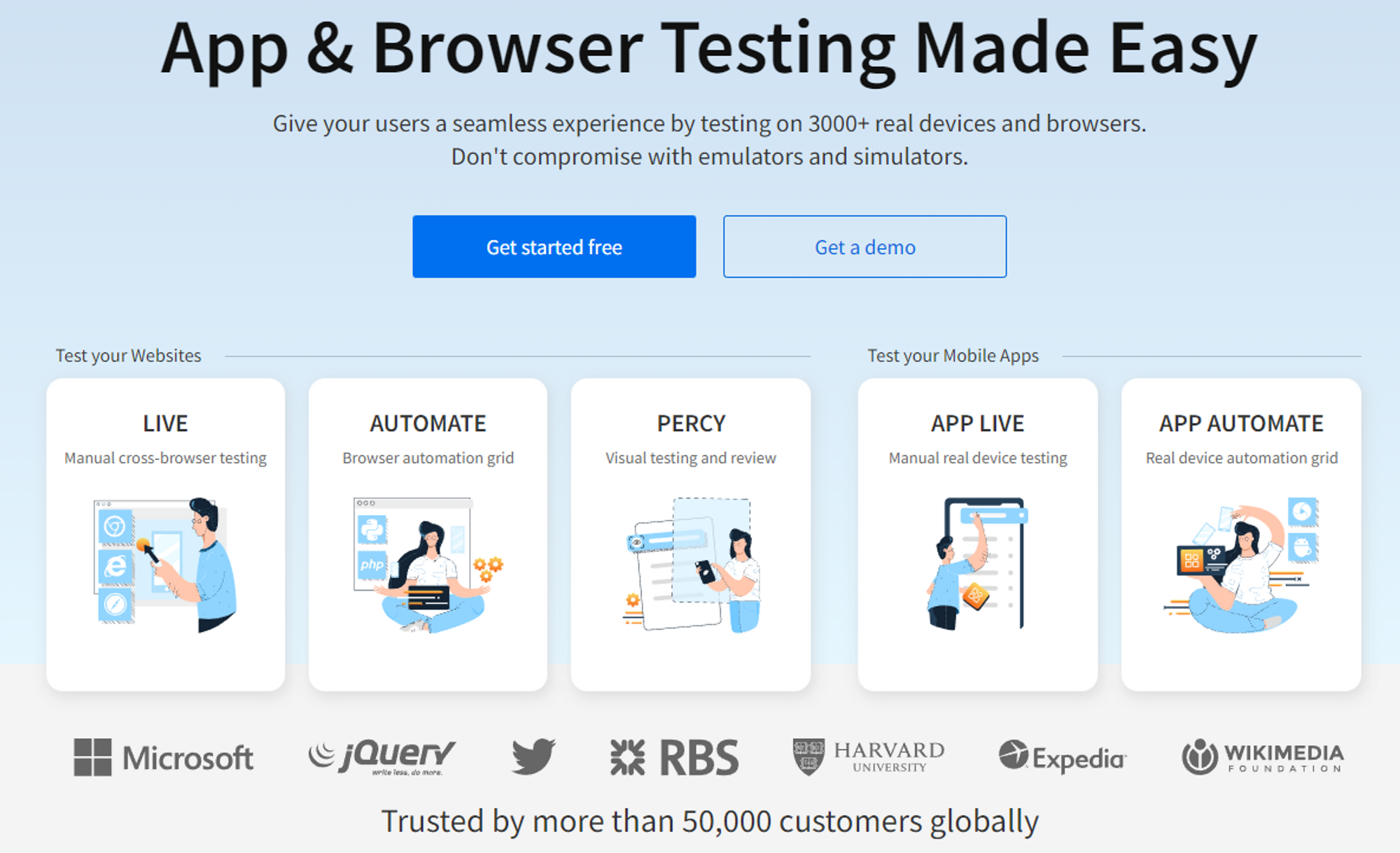
BrowserStack has a clear and compelling mission: "empower developers to build amazing experiences." The company remains steadfast in its dedication to providing premier software testing tools and ensuring that developers and QA teams can consistently deliver outstanding user experiences. With a goal of becoming the "testing infrastructure of the Internet," BrowserStack is set to reshape quality assurance standards.
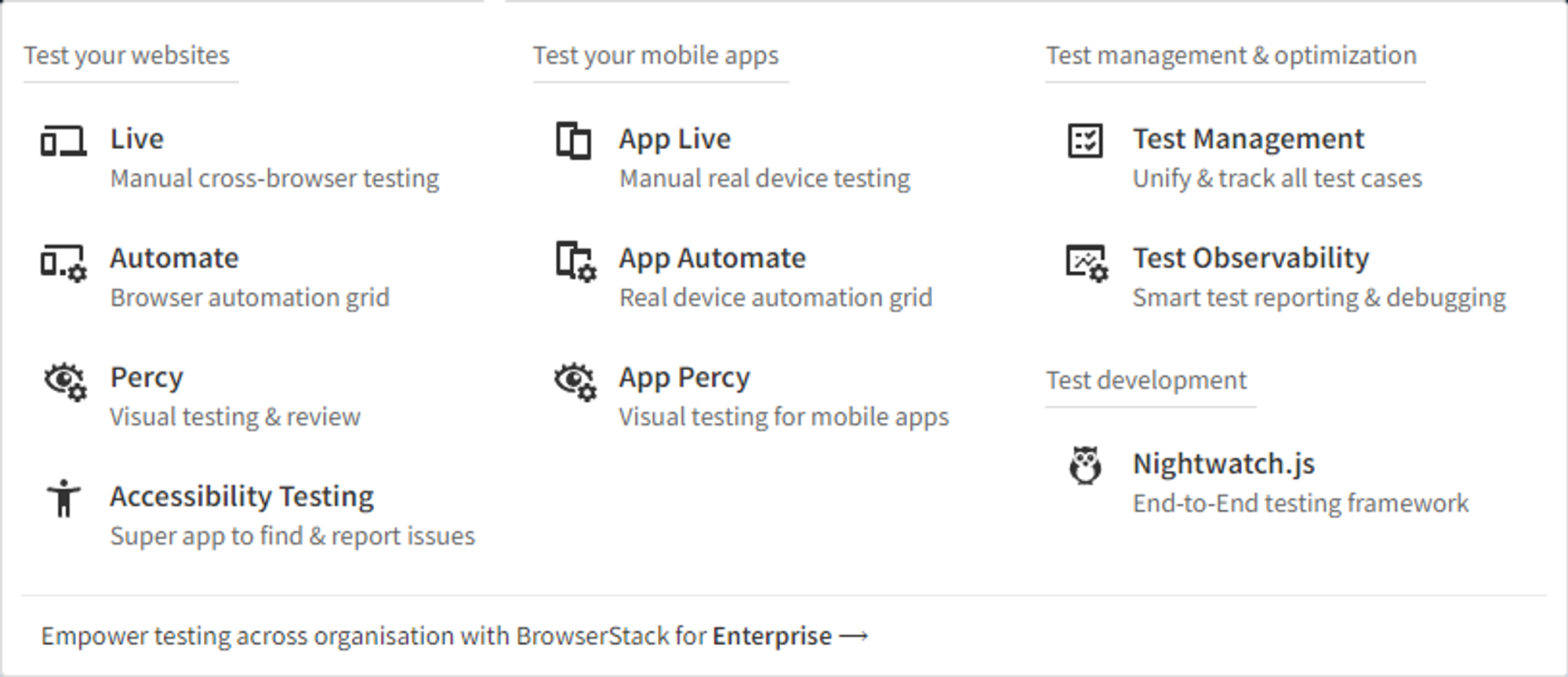
In addition to specific tools, there are some traits that can be found across BrowserStack’s entire suite of features.
In summary, BrowserStack's offerings underscore its dedication to quality, security, and efficiency. By presenting a range of tools tailored to diverse testing requirements, BrowserStack has established itself as an invaluable partner for developers and QA teams.
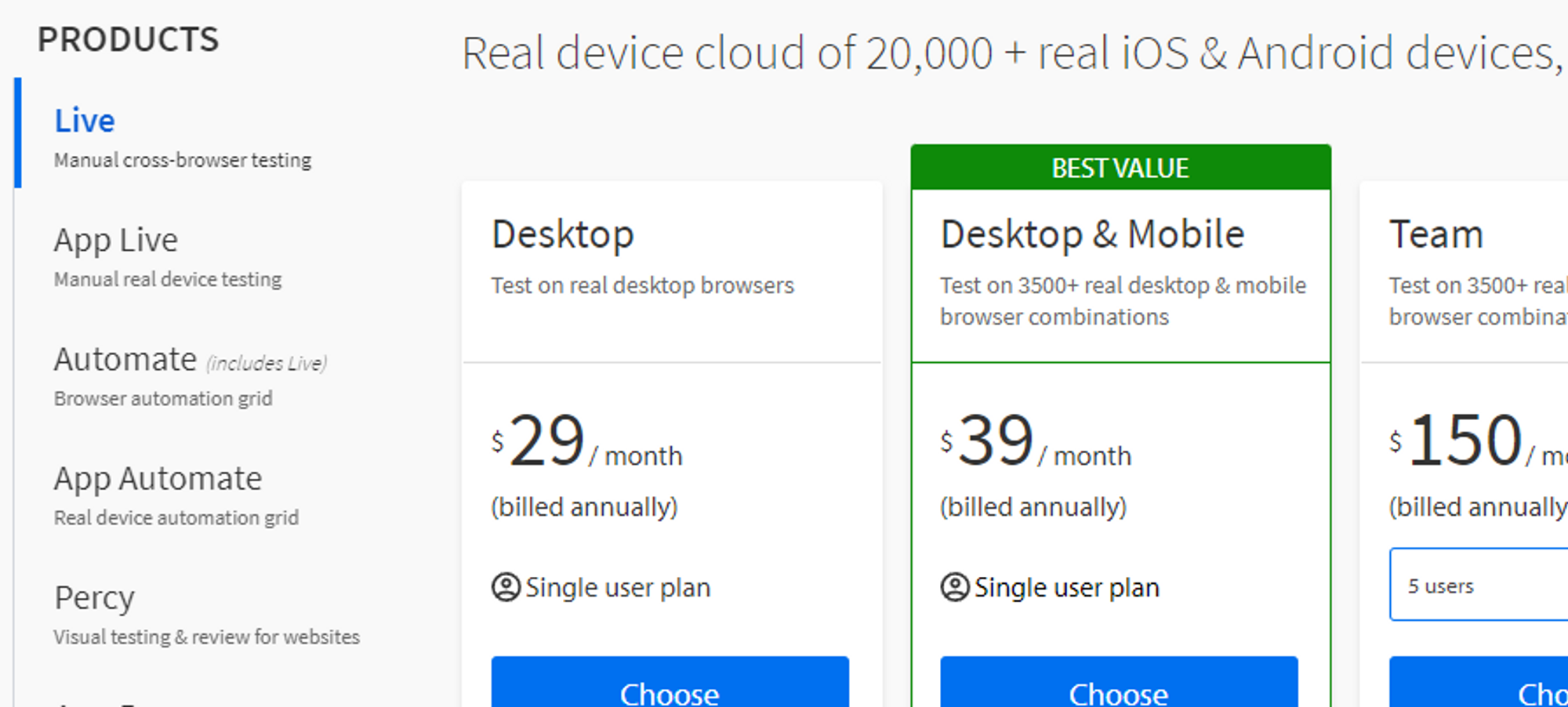
BrowserStack offers a diverse range of plans tailored to specific needs. The plan you should select largely hinges on the desired feature set. For people interested in the Live feature, the following plans are available:
.table_component { overflow: auto; width: 100%; } .table_component table { border: 1px solid #dededf; height: 100%; width: 100%; table-layout: fixed; border-collapse: collapse; border-spacing: 1px; text-align: left; } .table_component caption { caption-side: top; text-align: left; } .table_component th { border: 1px solid #dededf; background-color: #eceff1; color: #000000; padding: 5px; } .table_component td { border: 1px solid #dededf; background-color: #ffffff; color: #000000; padding: 5px; }
| Plan | Price (billed annually) | Key Features |
|---|
| Desktop
| $29/month | 3000+ desktop browsers. Unlimited testing minutes. Localhost, staging, private website testing |
| Desktop & Mobile
| $39/month | All features of Live. 20,000+ real iOS & Android devices. Mobile browsers |
| Team |
$150/month (for 5 users)
| All features of Desktop & Mobile. Collaborative debugging. Geolocation testing | | Team Pro | $199/month (for 5 users) | All features of Team. 2FA with OTP/SMS. Test payments via Apple Pay and Google Pay | | Enterprise | Custom pricing | All features of Team Pro. Advanced access control. Single sign-on. IP whitelisting | | Freelancer | $12.50/month | Standard features | | Open Source | Free | Standard features |
Reviews for BrowserStack on TrustRadius are predominantly positive. However, some users have pointed out areas for improvement, particularly in performance, support, and configurability.
.table_component { overflow: auto; width: 100%; } .table_component table { border: 1px solid #dededf; height: 100%; width: 100%; table-layout: fixed; border-collapse: collapse; border-spacing: 1px; text-align: left; } .table_component caption { caption-side: top; text-align: left; } .table_component th { border: 1px solid #dededf; background-color: #eceff1; color: #000000; padding: 5px; } .table_component td { border: 1px solid #dededf; background-color: #ffffff; color: #000000; padding: 5px; }
| Criteria | Rating (out of 10) |
|---|
| Likelihood to Renew
| 9.2 |
| Usability
| 9.3 |
| Availability |
9.1
| | Performance | 7.9 | | Support Rating | 8 | | Implementation Rating | 9.1 | | Configurability | 8.2 | | Contract Terms and Pricing Model | 9.1 | | Product Scalability | 9.1 | | Professional Services | 9.1 | | Vendor post-sale | 9.1 | | Vendor pre-sale | 9.1 |
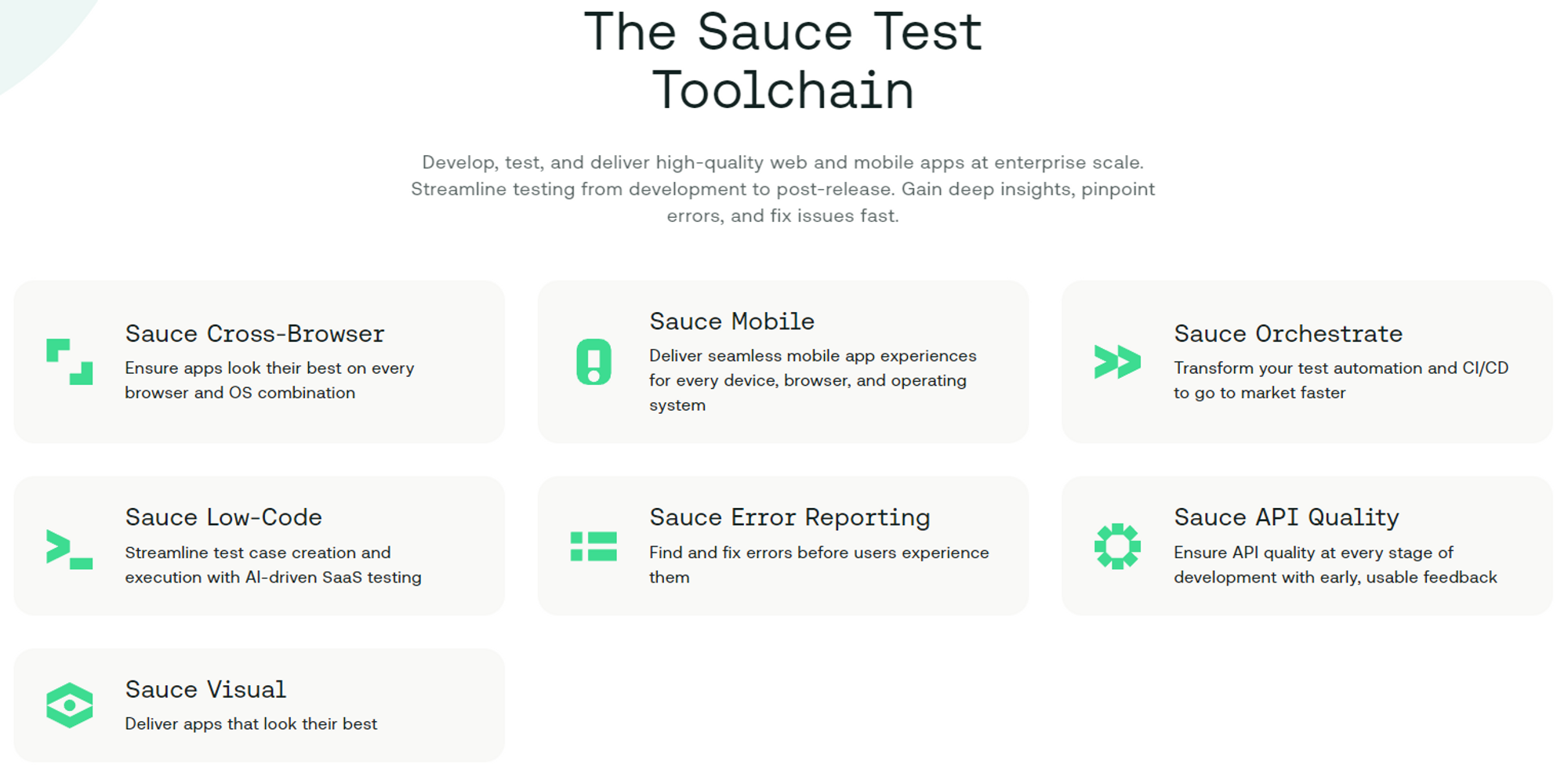
Sauce Labs has carved out a niche for itself through unwavering determination and technological innovation. Initially, it focused on testing for the Internet Explorer browser, addressing a significant challenge for developers globally. As the digital realm evolved, so did Sauce Labs. In 2013, Adobe's decision to shut down its BrowserLab testing platform and point users toward Sauce Labs underscored SauceLabs’ growing prominence in the testing arena.
The accolades didn't end there. Sauce Labs took the lead in supporting Automated Testing for Microsoft Edge and promptly extended its support to the Firebug plug-in for Mozilla Firefox. The firm experienced an uptick in investments during 2015 and 2016, and this financial boost facilitated the acquisition of TestObject, a distinguished real device mobile app testing platform, in December 2016.
Further solidifying its industry standing, Sauce Labs launched the Sauce plugin for Microsoft Visual Studio Team Services (VSTS) and unveiled the innovative Sauce Labs Test Analytics. The company's unwavering commitment to excellence garnered it multiple accolades, including a spot among the top 100 fastest-growing private companies in the Bay Area in 2015 and 2017. Additionally, Forrester Research hailed Sauce Labs as the "developers’ choice for cross-browser and mobile testing in the cloud," an endorsement that underscores its prowess.
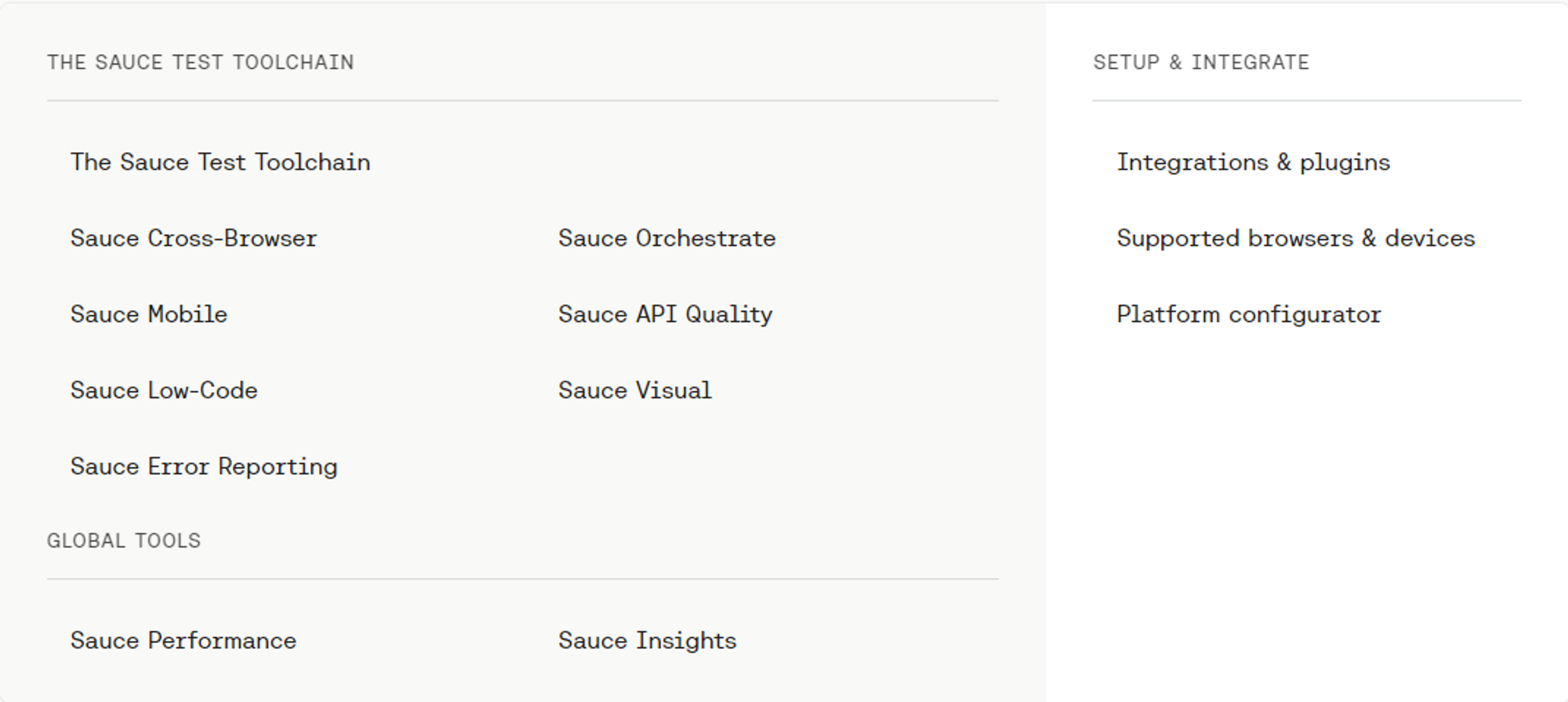
Sauce Labs has become an indispensable ally for developers and QA teams worldwide. Its expansive coverage ensures optimal compatibility across a vast array of browser-OS combinations, mobile emulators, simulators, and real devices, reflecting the diverse interactions of users.
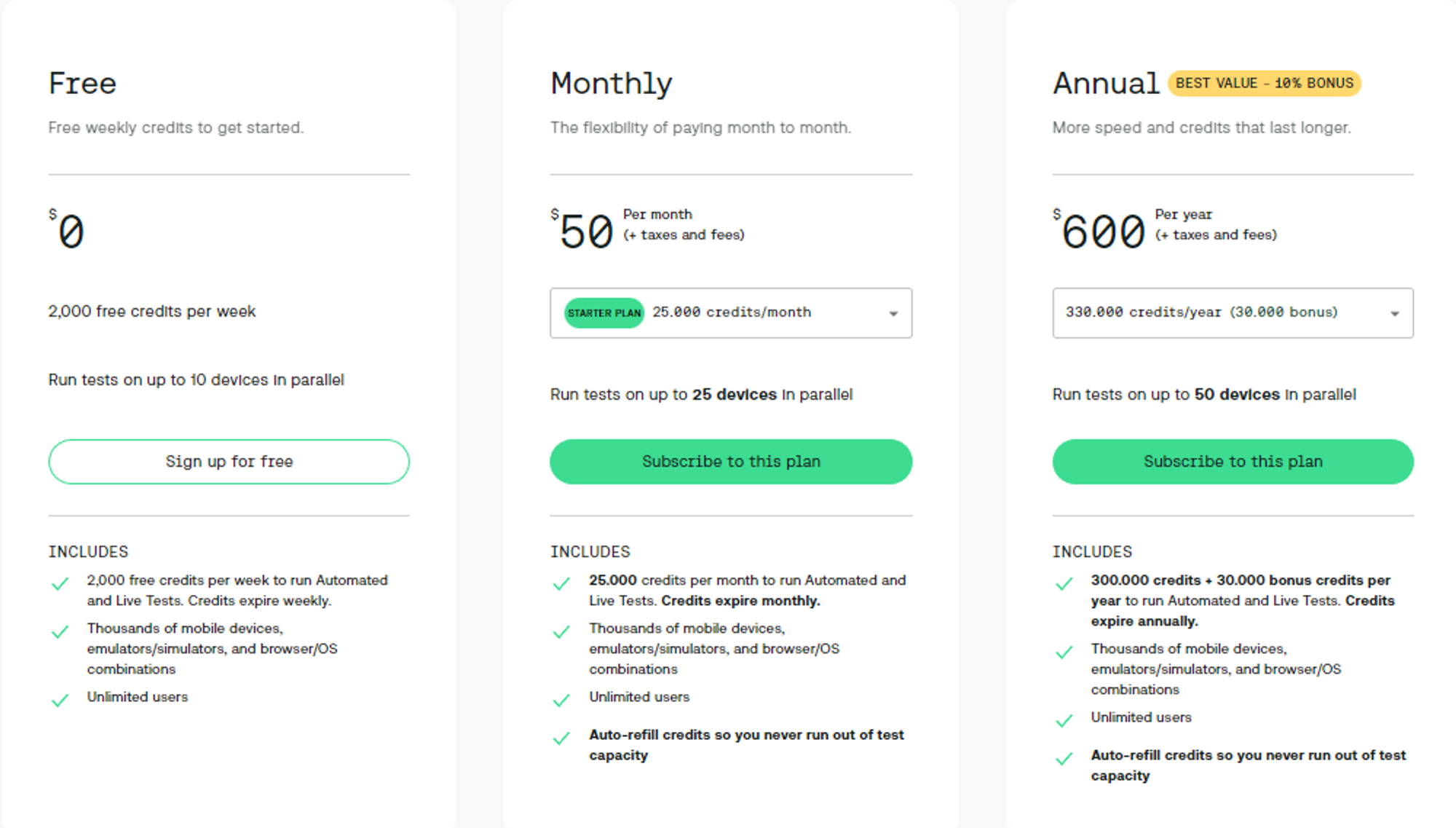
Compared with BrowserStack’s, Sauce Labs' credit-based pricing structure is refreshingly clear.
.table_component { overflow: auto; width: 100%; } .table_component table { border: 1px solid #dededf; height: 100%; width: 100%; table-layout: fixed; border-collapse: collapse; border-spacing: 1px; text-align: left; } .table_component caption { caption-side: top; text-align: left; } .table_component th { border: 1px solid #dededf; background-color: #eceff1; color: #000000; padding: 5px; } .table_component td { border: 1px solid #dededf; background-color: #ffffff; color: #000000; padding: 5px; }
| Plan | Price | Key Features |
|---|
| Free
| $0 | 2,000 free credits/week. Test on up to 10 devices in parallel |
| Monthly
| $50/month | 25,000 credits/month. Test on up to 25 devices in parallel |
| Annual |
$600/year
| 330,000 credits/year (including 30,000 bonus credits). Test on up to 50 devices in parallel |
| Enterprise
| Custom pricing | Unlimited automated testing minutes. Private device cloud. Single sign-on (SSO) |
| Mobile Beta Testing | $199/month (billed annually) | 50 apps, 500 beta testers. 180 days data retention. 10,000 video sessions/month |
| Open Source Projects | Free | Standard features |
While the TrustRadius page for Sauce Labs doesn't offer scores as detailed as BrowserStack’s, it indicates general user satisfaction with the product. However, it's noteworthy that there's a slight discrepancy between the modest 7.4 rating and the "key insights."
.table_component { overflow: auto; width: 100%; } .table_component table { border: 1px solid #dededf; height: 100%; width: 100%; table-layout: fixed; border-collapse: collapse; border-spacing: 1px; text-align: left; } .table_component caption { caption-side: top; text-align: left; } .table_component th { border: 1px solid #dededf; background-color: #eceff1; color: #000000; padding: 5px; } .table_component td { border: 1px solid #dededf; background-color: #ffffff; color: #000000; padding: 5px; }
| Attribute | Insight |
|---|
| Overall Rating
| 7.3 out of 10 |
| Total Reviews
| 286 Reviews and Ratings
|
| Would Buy Again |
91% of users would repurchase
|
| Value for Price
| 100% believe it offers good value for the price |
| Feature Set Satisfaction | 95% are satisfied with the feature set |
| Sales and Marketing Promises | 100% affirm it met sales and marketing promises |
| Implementation Satisfaction
| 90% felt the implementation met expectations |
Both platforms offer robust testing capabilities, but selecting the right one requires careful consideration of specific needs and constraints.
For many organizations, the cost of services significantly influences decisions. At first glance, BrowserStack's Freelancer plan, priced at $12.50 per month, seems reasonable. However, its scope may not fully address the comprehensive testing demands of an expanding startup. The Desktop & Mobile plan, at $39 per month, offers a more encompassing testing environment, spanning both desktop and mobile platforms.
And while Sauce Labs’ Free plan’s 2,000 credits per week are enticing, the plan may prove inadequate for startups with rigorous testing needs. Their Monthly plan, priced slightly higher at $50 per month, grants a substantial 25,000 credits, potentially aligning more closely with the expected testing frequency of a growing company.
There’s no such thing as a one-size-fits-all solution; choosing a tool requires careful consideration of a given tool’s feature set and whether it can meet your needs. For companies grappling with the following issues, the decision may involve answering these questions:
BrowserStack offers geolocation testing in its Team plan and higher tiers.
Sauce Labs doesn't provide clear information about geolocation testing in its listed plans.
BrowserStack supports testing on real iOS & Android devices within its Desktop & Mobile plan.
Sauce Labs includes mobile testing, but further investigation would be needed to understand the specific devices and configurations available.
BrowserStack includes this feature in its Team package.
Sauce Labs doesn't say whether collaborative debugging is part of its offerings.
In the startup realm, decisions are seldom easily cut-and-dried. Theoretically, BrowserStack's Desktop & Mobile plan, priced at $39 per month, aligns seamlessly with the prerequisites of geolocation and mobile app testing. The prospect of upgrading to the Team plan for enhanced collaborative debugging makes it even more appealing.
However, it’s wise to proceed with caution. Both platforms offer trial periods, and you should take advantage of that. Hands-on experience often reveals nuances that mere specifications can’t provide.
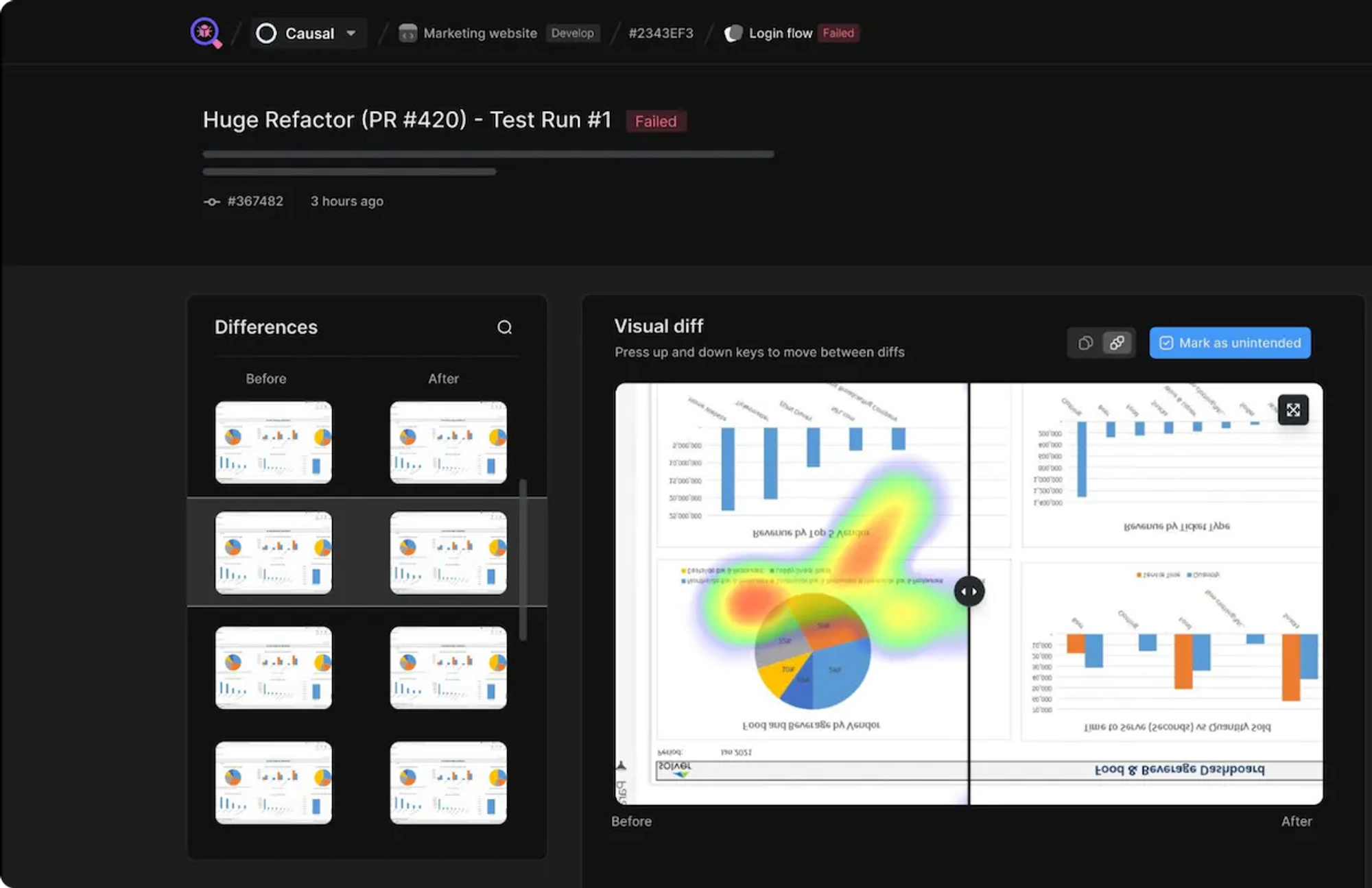
Although BrowserStack and Sauce Labs may be among the best options for cloud-based device testing, there are many other aspects of visual testing to consider. For instance, nearly all tools on the market — even no-code tools — require some amount of maintenance. As long as your test suite requires you to configure tests in some capacity, maintenance is inevitable.
The only way of solving this is by having instrumentation be the only aspect of configuration — enter Meticulous. This tool requires only that you install a simple Javascript snippet, after which Meticulous will record real user sessions. Then it analyzes screenshots with pixel depth, to catch any and all visual discrepancies.
All of this — combined with additional features found within Meticulous — lays the foundation for an efficient visual regression testing tool.
Both BrowserStack and Sauce Labs present a suite of tools tailored to streamline and elevate the testing experience for developers and QA professionals. However, picking one over the other requires a thorough understanding of their features, similarities, and distinctions.
.table_component { overflow: auto; width: 100%; } .table_component table { border: 1px solid #dededf; height: 100%; width: 100%; table-layout: fixed; border-collapse: collapse; border-spacing: 1px; text-align: left; } .table_component caption { caption-side: top; text-align: left; } .table_component th { border: 1px solid #dededf; background-color: #eceff1; color: #000000; padding: 5px; } .table_component td { border: 1px solid #dededf; background-color: #ffffff; color: #000000; padding: 5px; }
| Feature | BrowserStack | SauceLabs |
|---|
| Environment
| Extensive range of devices, browsers, and OS | Extensive range of devices, browsers, and OS |
| Hosting
| Hosted on the cloud
| Hosted on the cloud |
| Integration |
Compatible with renowned CI/CD tools
| Compatible with renowned CI/CD tools |
| Mobile Testing
| Facilitates mobile testing on actual devices | Facilitates mobile testing on actual devices |
| Pricing Model | Transparent monthly pricing | Operates on a credit-based system |
| Geolocation Testing | Accessible in premium plans | Not specifically highlighted |
| Collaborative Debugging
| Featured in the "Team" package | Not specifically highlighted |
| Visual Testing | Not a central offering | Prioritizes visual testing (notably post-acquisition of Percy) |
Different platforms resonate with different user segments. Startups might gravitate toward BrowserStack's Desktop & Mobile package, given its balance of cost-effectiveness and exhaustive testing features. In contrast, larger corporations might favor SauceLabs for its adaptability, focus on visual testing, and seamless integrations. Solo developers or independent contractors may be inclined toward BrowserStack for its intuitive interface and the Freelancer package catering to fundamental testing requirements.
Meticulous creates and maintains an exhaustive suite of e2e ui tests with zero developer effort.
This quote from the CTO of Traba sums the product up best: "Meticulous has fundamentally changed the way we approach frontend testing in our web applications, fully eliminating the need to write any frontend tests. The software gives us confidence that every change will be completely regression tested, allowing us to ship more quickly with significantly fewer bugs in our code. The platform is easy to use and reduces the barrier to entry for backend-focused devs to contribute to our frontend codebase."
This post from our CTO (formerly lead of Palantir's main engineering group) sets out the context of why exhaustive testing can double engineering velocity. Learn more about the product here.

Meticulous creates and maintains an exhaustive suite of end-to-end UI tests with zero developer effort. Learn more here.


